
September is World Alzheimer’s Month, and it’s the perfect time to reflect on how writing can play a significant role in supporting loved ones with Alzheimer’s. If you’ve read our post on why we should embrace the art of letter writing, you might remember that one of the benefits we highlighted was memory preservation. Our founder, Kat, writes letters to her grandmother who has Alzheimer’s to help hold onto those precious memories. Today, Kat is here to explain a bit more about how writing to someone with Alzheimer’s can be beneficial—for them and for you. Over to you, Kat!
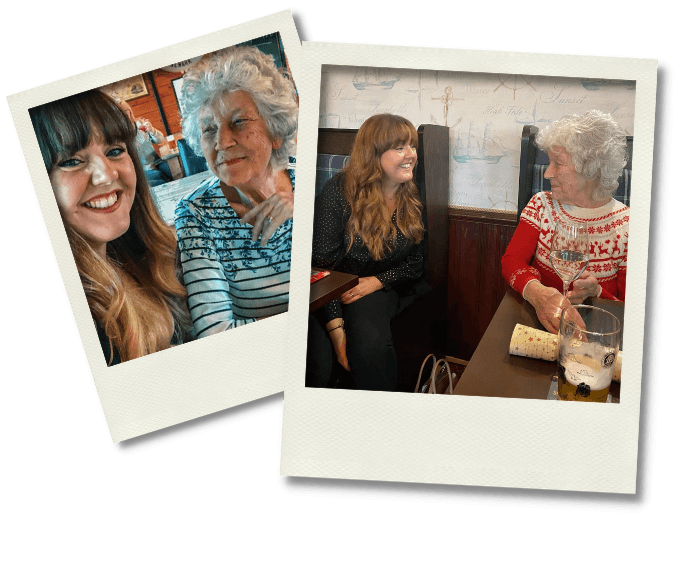
Hi everyone! I’m here to talk to you about how writing to those with Alzheimer’s can be so beneficial; not just to them but for you too. I have a grandmother, whom I call Nan (so I’ll refer to her as Nan throughout this post) who was diagnosed with Alzheimer’s around ten years ago. At first it wasn’t all that obvious, with a few forgetful moments here and there but in recent years it’s definitely become more severe, to the point that when I visit, she is beginning to wonder who I am. As the years have gone on, she rarely answers her home phone and when she does, she can’t remember the conversation taking place. With that in mind, I decided to start writing letters instead and there have been so many benefits!
It Promotes Communication
Even if someone with Alzheimer’s has difficulty with verbal communication, writing to them can provide an alternative form of communication that allows them to express themselves and feel connected to others. In my Nan’s case, she never writes back but the letters still promote communication that she can read and re-read as much as she likes rather than a phone call.

Letters Provide Stimulation
Writing can help stimulate the brain and promote cognitive function. This is particularly important for people with Alzheimer’s, as cognitive stimulation can help slow the progression of the disease and improve quality of life.
It Preserves Memories
Writing about shared experiences or memories can help someone with Alzheimer’s hold onto those memories for longer. Reading old letters or cards can also provide a sense of familiarity and comfort. There has been many I time I’ve gone to visit Nan and she’s thrust one of my letters into my hand from months, sometimes years ago saying how much she enjoyed it. The fact that it isn’t the most recent correspondence doesn’t matter. It’s the fact that she is comforted and gets enjoyment out of the letters that are important.
They Help Maintain Relationships
Writing to someone with Alzheimer’s can help maintain relationships, even if the person is no longer able to recognise or remember the sender. The act of receiving mail can be a source of comfort and happiness, even if the person doesn’t fully understand who the sender is. With my Nan not being local, I can’t visit her as often as I’d like so the letters are also an interim measure to keep her in the loop and maintain that grandmother and granddaughter relationship we have despite the disease. The letters have definitely helped retain some of Nan’s memories and on the odd occasion she will have a vague recollection of reading what I’ve been up to recently from my letters.
Tips for Writing to someone with Alzheimer’s
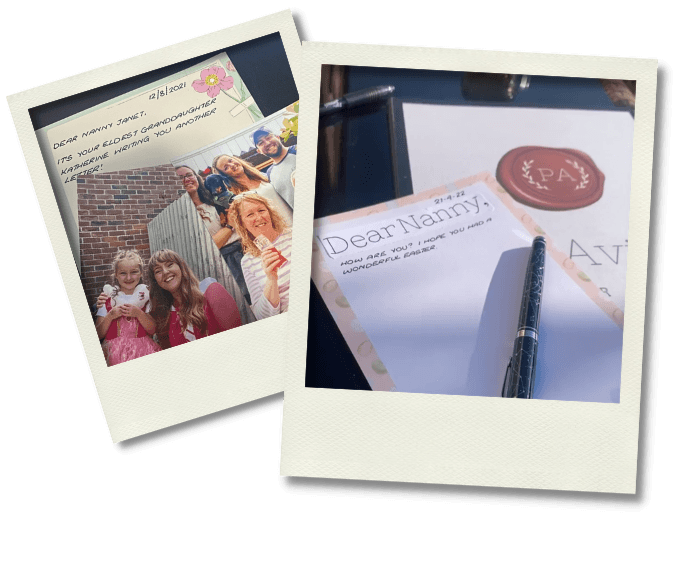
When writing to someone with Alzheimer’s, it’s important to keep the language simple and clear, and to avoid using complex sentences or unfamiliar words. You can also include photos or other visual aids to help jog their memory and make the experience more enjoyable for them. With Nan, I write on the back of the photos who it is and the date, as well as addressing her letter’s with “Hi Nanny, it’s your eldest granddaughter Katherine writing to you” and will sign off with “Lots of Love, your eldest granddaughter Katherine xxx” The hope is it’ll jog her memory of who I am and who is writing to her.
Here are some further tips on how to write to someone with Alzheimer’s:
- Use simple language: Keep your language simple and avoid using complex words or sentences. Use short sentences and familiar words that are easy to understand.
- Be clear and concise: Keep your message clear and concise. Stick to one or two main ideas per letter or message.
- Be positive and reassuring: Use positive language and avoid language that could cause confusion or anxiety. Reassure the person that they are loved and that they are not alone.
- Use visual aids: Include photos or other visual aids to help jog their memory and make the experience more enjoyable for them.
- Avoid correcting or contradicting: If the person with Alzheimer’s makes a mistake or says something that doesn’t make sense, avoid correcting or contradicting them. Instead, focus on the emotion or feeling behind what they are saying.
- Use familiar topics: Write about topics that are familiar to the person, such as family, friends, hobbies, or memories. This can help them connect with the message and feel more engaged.
- Keep it short and frequent: Write short letters or messages that are easy to read and understand. Consider sending letters or messages more frequently, even if they are short, to help maintain the connection and keep the person engaged.
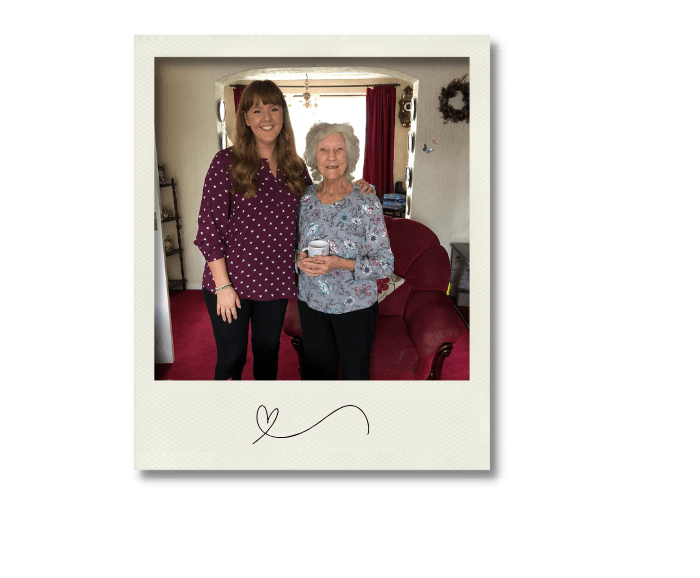
Overall, when writing to someone with Alzheimer’s, it’s important to approach the communication with empathy and understanding. Remember that the person may be experiencing confusion or memory loss, and try to make the experience as positive and enjoyable as possible. I feel that my Nan and I have a greater connection through the letters I send. The letters keep our relationship going in between visits and knowing that they bring her a sense of joy and stimulation in the meantime, brings a real sense of fulfilment.
Sending letters to loved ones with Alzheimer’s can truly make a difference, and this World Alzheimer’s Month, we want to help you keep those connections alive. To support you in this meaningful gesture, we’re offering a free downloadable Forget Me Not writing paper. It’s designed to help you stay connected with loved ones, and we hope it brings some comfort during those special moments of writing.
Click below to download your free Forget Me Not writing paper and share a little love today.
If you write to someone with Alzheimer’s I’d love to connect and hear your story by popping me an email at kat@paravionpaper.com or by contacting me on Instagram. In the meantime, I hope this post was helpful!
Best wishes,
Kat xx
